Posts

The Splendor & Captain Kelly

Image
  ( Returning to the ship after a bus tour. Capt. Kelly was ALWAYS there to greet us and several red-shirted helpers to ensure our safety. Remember, the river was 40-feet low so we had to walk downhill a ways on newly-laid gravel.) The American Cruise Ship Splendor could carry 185 passengers; on my trip there were 164 of us, with a crew of 59, including the captain. The Splendor drew only 7 ½ feet of water (“think of it like a hotel on a flat-bottomed barge”) and only needs 9 feet of water to proceed….. and I understood that many times that was the river’s depth during my cruise. The average ship’s speed was 7 to 8 miles per hour (yes, on the rivers, length is measured in miles) and the average river flow is 3 miles per hour. The captain explained in a Q&A session that the biggest usage on the ship was potable water but they did carry 28,000 gallons…….. and resupplied with a sometimes very long hose at every port stop. The ship had a MSD, a marine sanitation discharge system, ...
Vicksburg Military Park, Part 3

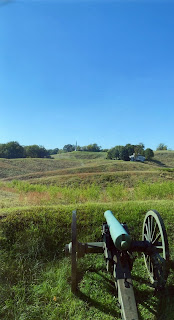
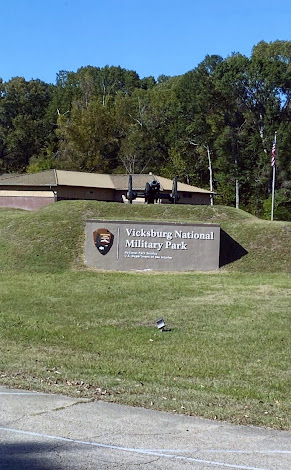
  On this trip down the Mississippi, I carried a small notebook and scribbled notes furiously. Visiting this national park, I was especially overcome by the enormity of this battle. The notes are mine and the facts as I understood from our guide. After the battle, some 17,000 Union dead were buried in a cemetery near the battlefield, now part of the Vicksburg National Park. We were told that the upright stones were for the identified soldiers and the “stubby flat” stones were for the 13,000 unidentified. The Confederate dead were buried in trenches. The Vicksburg National Military Park was established on 21 February 1899 to preserve and protect the areas associated with the defense and siege of Vicksburg. The park covers over 1800 thousand acres. During the battle, the hills were stripped of trees. During the 1930s, the CCC men replanted many trees. In 1917, veterans were invited to return to the site and point out just where their units stood and fought and some 8800 showed up! Ma...

Vicksburg National Park, Part 2

Image
On this trip down the Mississippi, I carried a small notebook and scribbled notes furiously. Visiting this national park, I was especially overcome by the enormity of this battle. The notes are mine and the facts as I understood from our guide. Soon after Christmas, 1862, Grant, under orders from President Lincoln, came down personally from Memphis “to get the job done!” His 43,000 man army was on the west side of the Mississippi and it took two days to ferry the troops, horses and armaments, across the river.   It did help Grant’s cause that the Confederate generals were in-fighting; Johnston abandoned the town of Jackson as Grant approached. But Pemberton’s troops were well entrenched in a semi-circle around Vicksburg. As well as the Confederate army, there were 3500 citizens there. As the Union forces fought their way to Vicksburg, the net closed around the town, the resistance and battlements repulsing Grant four times. But Grant had way more men and Lincoln was re-supplying hi...

Vicksburg National Park, Part 1

Image
  On this trip down the Mississippi, I carried a small notebook and scribbled notes furiously. Visiting this national park, I was especially overcome by the enormity and importance of this battle. The notes are mine and the facts as I understood from our guide.     For nearly 200 years, men have been attempting to “tame” the mighty Mississippi River but “Mother Mississippi” has slapped back most all attempts through the years. Throughout history, the Mississippi has been a vital commerce and travel “highway” draining most all the American Midwest.  The river was of special importance during the Civil War.  In 1837, Robert E. Lee was given the task of “taming” the Mississippi River. That meant he started clearing the floating trees and wrecked boats from the river. He was trying to clear a navigable channel, not clear the entire river. Lee pioneered the revetment for erosion control. This was putting “stuff” along the river bank to hold the bank. First was woven...

Bald Eagles On The Upper Mississippi River

Image
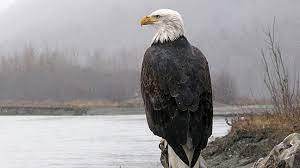
  According to Aaron, our education presenter on the cruise, the Mississippi River valley is a major fly path for many eagles (and other birds). While they can be seen in almost all states, they are predominately in Alaska, Minnesota and Wisconsin. Here is some Upper Mississippi River eagle trivia: An eagle's head stays dark until age 5. In the early 70s, DDT nearly decimated the eagle population.  When only one nest could be found (by boat/survey between St. Paul and St. Louis) a loud alarm was raised and finally in 1973 DDT was banned.    Unless you are Native American, it is illegal to own any part of an American Bald Eagle.  Eagles mate for life; they lay 1-3 eggs per year with only a 50% survival rate.  Eaglets fledge in 8-12 weeks.  Nests can be as big and heavy as a VW bug!  Eagles only weigh 7-8 pounds and have a 6-8 foot wingspan. They can turn their heads 180o.  Females are 1/3 larger than males. The name "bald" comes from an Old En...

Mudlarking On The Mississippi

Image
  Ever heard the term mudlarking ? If you’ve talked very much with me, you know that mudlarking, or beach-walking-looking-for-treasures is one of my favorite activities. I’ve been a beachcomber all my life and just recently learned about mudlarking. Nicola White has a YouTube channel showing her walking along the Thames foreshore in London at low tide and finding wonderful and interesting things, some even dating back to Roman times. I’m hooked on her posts.   So of course on my cruise I looked for opportunities to walk along the Mississippi and see what I might find. The river is at a 40-year low which means lots of beach exposed that hasn’t been in 40 years. Here is our ship moored just below the St. Louis Arch showing the LOW river line. I did pick up some interesting glass and other stuff and did create a window-art piece with it.... here are my finds in t he raw (laid out on a daily bulletin on the ship):    It was here that I found my biggest find!  The...

Pecan Pralines! Best Candy Ever!

Image
  Of course I snagged a Pecan Praline at most every opportunity! They are quintessentially The South and they are beyond description delicious. Several of my fellow passengers and I went looking for The Best Praline recipe and we agreed: this looks like it! But all did agree on this: you must have a candy thermometer for best results.  ******BEST Louisiana Pralines Recipe These Louisiana pralines are the best sweet tooth treat because they're sweet, filling and so addicting. A mix of cream, vanilla, and pecans combine perfectly to make this easy bite-sized candy. Prep Time 5   minutes Cook Time 15   minutes Total Time 20   minutes Ingredients 1 1/2   cup   chopped pecans 7   tbsp   salted butter 1   cup   light brown sugar 1 1/4   cup   granulated sugar 1   tbsp   pure vanilla extract 1/2   cup   half & half Instructions Combine the butter, sugars, and half in half into a large saucepan, then turn t...